
By Assistanimal | 26 May 2026

One of the hardest parts of using an assistance animal in public is being questioned at the door. A staff member may ask for proof. A manager may say the business has a policy. A security guard may say the animal cannot come in unless the handler shows a certain card. The handler is then left trying to protect their privacy, explain the law, keep the animal settled and avoid a public scene.
Australian law does allow businesses to ask for evidence in some situations. But that does not mean every question is fair, every demand is reasonable, or every refusal is lawful. There is a difference between asking for evidence that an animal is an assistance animal and interrogating a person about their private medical history.
This article is general information for Australian assistance animal handlers, families, advocates and businesses. It is not legal advice. If you have been refused access, treated badly, or told your animal is not accepted, get advice from Legal Aid, a community legal centre, a disability legal service or a solicitor before choosing a complaint pathway.
The simple rule: be ready to show evidence that the animal is an assistance animal and is trained to meet appropriate hygiene and behaviour standards in public. You should not have to hand over your whole medical file at the front counter.
The Australian legal starting point
The Disability Discrimination Act 1992 recognises assistance animals in federal discrimination law. The Act deals with disability discrimination in public life, including access to premises, goods, services and facilities. The Australian Human Rights Commission explains that a person using an assistance animal may be protected where the animal is trained to alleviate the effects of disability and trained to meet appropriate standards of hygiene and behaviour in public.
The Australian Human Rights Commission has also noted that an animal does not always have to be trained by an accredited organisation to fall within the DDA. Depending on the facts, evidence of training, task work, public behaviour and hygiene can matter.
That is why blanket answers can be dangerous. A handler saying “you can never ask for proof” is not right in Australia. A business saying “only one exact card is accepted everywhere” can also be wrong. The proper question is usually: what evidence is reasonably needed to show this is an assistance animal, and is the request being made in a respectful, lawful and practical way?
AHRC access guidanceDisability GatewayDisability Discrimination Act
What a business can usually ask for
If a staff member is not sure whether an animal is an assistance animal, the Australian Human Rights Commission says it is not against the law to ask for evidence that the animal is an assistance animal, or that it is trained to meet standards of hygiene and behaviour appropriate for an animal in a public place.
Depending on the situation, useful evidence may include:
- a State or Territory assistance animal identity card, permit or pass;
- identification from a recognised or registered training organisation;
- training records showing the animal is trained to assist with disability-related needs;
- public access assessment or hygiene and behaviour evidence;
- a medical certificate or health practitioner letter that confirms disability-related need, without giving unnecessary private details;
- public transport assistance animal accreditation, where the issue involves public transport.
The evidence does not need to become a public performance. Staff should not demand that a handler explain their diagnosis in front of strangers, disclose medication, describe trauma, hand over treatment notes, or make the animal perform tasks on command just to satisfy curiosity.
What handlers should keep ready
It helps to carry a small, organised evidence kit. That does not mean carrying every private document you own. It means having enough to answer reasonable questions quickly.
| Carry this if you have it | Why it helps |
|---|---|
| Current handler card, pass, permit or public transport accreditation | It gives staff a simple official document to check, especially in States that run public access or transport schemes. |
| Short letter confirming disability-related need | It can confirm the animal is connected to disability without giving away unnecessary medical history. |
| Training or public access evidence | It helps show the animal is trained to assist and trained for hygiene and behaviour in public places. |
| Vaccination or health records, if relevant | These may help if a business raises hygiene or animal health concerns, but they should not replace assistance animal evidence. |
| A short written access statement | This lets you respond calmly when staff are confused, rushed or relying on a poor policy. |
Privacy matters. If a business asks for more than you think is necessary, ask them to put the request in writing and explain exactly what law or policy they are relying on. Do not feel pressured to discuss your diagnosis at the counter.
State and Territory evidence can differ
Australia does not have one simple national card that solves every public access dispute. Federal discrimination law sits beside State and Territory systems, transport rules, local government rules and organisational policies. That is why a handler may have clear evidence in one place but still be challenged in another.
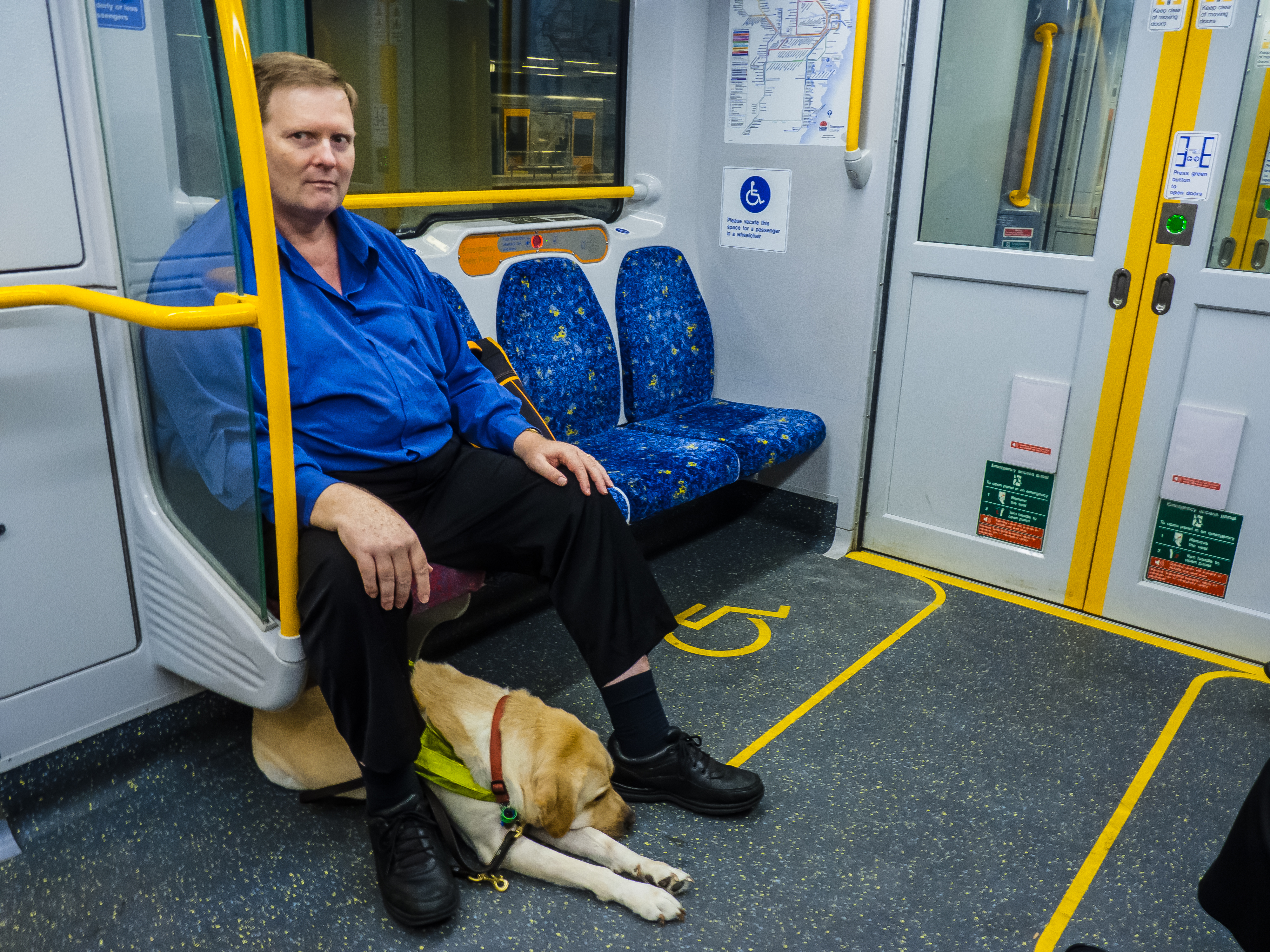
For example, Queensland has a guide, hearing and assistance dog certification system where handlers with certified dogs are required to have a handler identity card displayed or available for inspection and the dog wears an identifying coat. New South Wales public transport has an Assistance Animal Permit and accepted accreditation rules. Victoria has an assistance animal pass for public transport, and says guide dogs and hearing dogs do not need that pass for Victorian public transport.
Those systems are important, but they do not mean every private business can ignore the DDA. If a business refuses access because it does not understand the difference between a pet and an assistance animal, or because its policy is narrower than Australian discrimination law, the business may be creating legal risk for itself.
| Place | Official evidence starting point |
|---|---|
| Queensland | Queensland Government handler identification for certified guide, hearing and assistance dogs. |
| New South Wales public transport | Transport for NSW Assistance Animal Permit or accepted accreditation. |
| Victoria public transport | Transport Victoria Assistance Animal Pass, with different rules for guide dogs and hearing dogs. |
| National disability information | Disability Gateway assistance animals links people to State and Territory information. |
A calm script for handlers
When you are challenged, a short script can stop the conversation drifting into personal medical details:
“This is my assistance animal. The animal is trained to assist me with disability-related needs and is trained for hygiene and behaviour in public. I can show evidence of that. Please tell me exactly what evidence you need to see and who is making the access decision.”
If the staff member keeps pushing:
“I am not comfortable discussing my private medical history at the counter. If you are refusing access, please write down the reason, the policy you are relying on, your name and the manager’s name.”
If the business says “company policy”:
“Please show me the policy. A company policy still needs to comply with Australian discrimination law. I am happy to provide reasonable assistance animal evidence, but I am asking that this be handled respectfully.”
A quick checklist for businesses
Businesses should train front-line staff before a conflict happens. A good procedure protects handlers and protects the business.
- Ask calmly and privately where possible.
- Ask for assistance animal evidence, not a public explanation of the person’s diagnosis.
- Accept that evidence may differ between States, transport systems and training pathways.
- Do not assume a dog is fake because it is not a guide dog.
- Do not assume a vest or patch alone proves legal access.
- Do not make a handler repeat private information to several staff members.
- If refusing access, record the reason, the policy and the decision-maker.
- Review the decision quickly if the handler produces evidence.

If access is refused
If a business refuses access after you provide reasonable evidence, write down what happened as soon as you can. Record the date, time, place, staff names, exact words used, what evidence you offered, who made the decision, what policy was mentioned and what loss or distress followed. Keep receipts, booking records, screenshots, emails and witness details.
Then get advice before lodging a complaint. Depending on the facts, a complaint might go through the Australian Human Rights Commission, a State or Territory human rights or anti-discrimination body, QCAT, VCAT, NCAT or another tribunal pathway. The right pathway can depend on the State, the type of service, whether the matter is transport, housing, work, education, goods and services, or access to premises.
The goal is not to argue forever at the door. The goal is to protect access, dignity and evidence. A business that asks a reasonable evidence question politely is different from a business that uses “policy” as a shield for discrimination.
Useful links
- Australian Human Rights Commission: assistance animals and the Disability Discrimination Act
- Australian Human Rights Commission: improving access for consumers with disability
- Disability Gateway: assistance animals
- Federal Register of Legislation: Disability Discrimination Act 1992
- Queensland Government: identification for handlers
- Transport for NSW: Assistance Animal Permit
- Transport Victoria: Assistance Animal Pass
- Image source: assistance and guide dogs on public transport in Australia