
By Assistanimal | 23 May 2026

Being refused access with an assistance animal is not just bad customer service. For a handler, it can mean public humiliation, missed appointments, lost money, extra transport, medical stress, and the feeling that ordinary life is only available if a staff member decides to believe you.
When the matter becomes a complaint, the business may suddenly sound very different. The refusal may be described as a misunderstanding. A blanket “no animals” rule may be called a reasonable policy. The assistance animal may be challenged. The harm may be minimised. A representative or lawyer may argue that no compensation should be paid, or that the handler has not proved enough.
This article explains the Australian and Queensland pathway in plain language. It is general information, not legal advice. If you are preparing a discrimination complaint, QCAT matter, QIRC matter, AHRC complaint or federal court pathway, get legal advice from a solicitor, Legal Aid Queensland, LawRight or a community legal centre where possible.
The Pathway In Queensland
In Queensland, most non-work discrimination complaints start with the Queensland Human Rights Commission. QHRC assesses the complaint, notifies the respondent if it is accepted, and usually tries dispute resolution or conciliation.
QHRC does not decide who is right or wrong. It does not act as the complainant’s lawyer. Its role is to provide a neutral dispute resolution process and help the parties try to resolve the complaint.
If an Anti-Discrimination Act complaint is not resolved, it may be referred to a tribunal. Non-work matters generally go to QCAT. Work-related matters generally go to the Queensland Industrial Relations Commission. QCAT says only the Commission can refer a discrimination complaint to QCAT; a complainant or respondent does not simply start the QCAT discrimination case themselves.
After referral, QCAT may issue directions, require contentions and evidence, list directions hearings or dispute resolution, and eventually hold a hearing. At the hearing, the decision is based on the law and the evidence before the tribunal.
The Commonwealth Pathway
A handler may also have rights under the Disability Discrimination Act 1992. The DDA protects people with disability in areas such as access to premises, goods, services and facilities. It also deals with discrimination connected to assistance animals.
The Australian Human Rights Commission can handle DDA complaints. The AHRC complaint process is free. If the complaint is not resolved or is discontinued, there may be a federal court pathway, but that is a serious step and legal advice is important.
Which pathway is best can depend on what happened, where it happened, who the respondent is, whether the matter is work-related, and what outcome the handler needs. Do not assume QCAT is always the only option.
Common Arguments You May Hear
People often call them “games” because they feel like delay, pressure or story-changing. Sometimes the other side is simply testing the evidence. Sometimes they are trying to reduce risk or avoid compensation. Either way, a handler needs to be ready.
“It was just our policy.” A policy is not automatically lawful. A pet policy is not the same thing as an assistance animal process. The question is whether the person was treated unfairly because of disability or because they were accompanied by an assistance animal.
“We did not refuse access.” This is why notes matter. Write down the exact words used, who said them, whether you were asked to leave, whether service stopped, whether you were separated from your animal, and whether you left because staying became unreasonable.
“The dog was not an assistance dog.” Be ready for this. Keep evidence organised: Queensland handler identity card if applicable, coat or badge details, training documents, public access assessment records, task training information, and any documents showing the animal is trained to assist and meet public hygiene and behaviour standards.
“We had safety or hygiene concerns.” Ask what the actual concern was. A real incident is different from a vague fear. Was the animal aggressive? Did it toilet indoors? Was it out of control? Or did staff simply assume a dog could not enter because food, customers or policy were involved?
“There was no loss.” Loss is not only a receipt. It may include out-of-pocket costs, missed bookings, extra travel, lost income, medical impact, distress, humiliation and the practical effect of being excluded. But you still need evidence. Keep receipts, appointment records, messages, witness details and notes about the impact.
“We offered a settlement, so the matter should end.” A settlement offer is not the same as a fair outcome. Before accepting anything, consider whether it covers direct costs, apology, staff training, policy change, future access, confidentiality terms and whether you are being asked to give up important rights.
Delay And Pressure Tactics To Watch For
Once a business has a representative or lawyer involved, the dispute can become less about the original refusal and more about procedure. Not every delay is improper. People do get sick, managers go on leave, lawyers need instructions and public holidays happen. But repeated delay can wear a complainant down, especially when the handler is self-represented, disabled, stressed or already exhausted from the incident.
Common patterns include replying right before a deadline, replying after a deadline and acting like it does not matter, asking for extension after extension, saying the only person who can approve a response is unavailable, waiting until a Friday afternoon or holiday period to send material, or producing documents so late that the handler has little time to answer them.
Another common tactic is shifting the reason. At the door, staff may say “no dogs”. Later, the business may say it was a hygiene concern. Then it may become a safety concern. Then it may become an argument that the animal was not an assistance animal. If the story changes, write that down. A changing explanation can matter.
Some respondents also try to bury the handler in process: long letters, demands for particulars, objections to wording, requests for medical detail, arguments about the dog’s status, or settlement offers with broad confidentiality and “no admission” clauses. Sometimes those steps are normal legal process. Sometimes they are used to make the complainant feel outmatched.
The best response is not panic. Keep everything in writing. Save every email and attachment. Note the time and date of late replies. If someone says a decision-maker is unavailable, ask when they will be available. If a deadline is missed, politely note it. If late material is served, ask for reasonable time to respond. If the matter is before QCAT or another tribunal, follow the directions and ask the tribunal for directions if the other side’s delay affects your ability to prepare.
Do not let delay tactics make you miss your own deadline. If the other side is late, keep your side clean: meet your dates, ask for extensions early when needed, and keep a record of every procedural problem.
What Compensation Is Really About
Compensation is not automatic just because the incident was upsetting. A tribunal looks at the evidence and the law. Under Queensland’s Anti-Discrimination Act, if a complaint is proven, a tribunal may make orders including compensation for loss or damage, orders to redress loss, private or public apology or retraction, and programs to eliminate unlawful discrimination.
That means the handler should prepare a clear picture of what happened and what it caused. Do not just say, “I was discriminated against.” Explain the event, the protected attribute, the access refusal, the evidence you had, the impact and the remedy you are asking for.
A practical compensation record might include transport costs, cancelled appointment fees, receipts, lost work time, medical notes where relevant, counselling records where appropriate, witness statements, screenshots, complaint emails and a diary note written close to the time.
How To Prepare Before QCAT Or A Tribunal
Start with a timeline. Put every event in date order. Include the first contact, the refusal, what was said, what evidence was shown, who witnessed it, what complaint was made, what response came back, conciliation steps and any later changes in the business’s explanation.
Keep your evidence clean. Save files with clear names. Keep original emails. Take screenshots with dates visible. Write down phone conversations immediately after they happen. If you ask for CCTV, do it quickly and in writing, because footage may be overwritten.
Separate facts from argument. “The manager said, ‘we do not allow dogs in here’” is a fact. “The manager hates disabled people” is an assumption unless there is evidence. Tribunal matters are stronger when the facts are precise.
Follow directions carefully. If QCAT or another tribunal tells you to file contentions, evidence or submissions by a date, treat that date seriously. If you need more time, ask before the deadline and explain why.
Do Not Let The Dog’s Status Become A Mess
If the other side says your animal is not an assistance animal, the response should be organised and calm. Show the animal’s role, training and behaviour. Explain the disability assistance in broad terms without giving more private medical detail than necessary.
For a Queensland certified guide, hearing or assistance dog, the Queensland Government says certification can be shown by the handler identity card and the blue and white badge on the dog’s harness or coat. For trained assistance dogs not certified by Queensland, Queensland Government guidance also recognises that public access rights may still arise under the DDA and that evidence can be requested.
If your documentation is incomplete, get advice early. Do not wait until the hearing to discover that the central argument is about evidence of training, hygiene and behaviour.

What To Ask For
The outcome should fit the harm. Some handlers need money for direct loss. Some need a written apology. Some need staff training, a policy change, confirmation of future access or a commitment that the same refusal will not happen again.
In settlement discussions, be specific. Instead of asking only for “compensation”, set out what you want and why: direct costs, distress and humiliation, staff training, policy correction, written apology, and a named contact person for future access.
Be careful with confidentiality clauses. A business may want the matter kept quiet. That may be acceptable in some cases, but it can also stop a handler from talking about what happened. Get advice before signing.
The Bottom Line
Businesses, representatives and lawyers may argue hard. They may say the dog was not an assistance dog. They may say the refusal never happened. They may say the policy was reasonable. They may say the handler suffered no real loss.
The answer is preparation. Keep evidence. Know the pathway. Stay factual. Ask for written reasons. Do not rely on memory alone. Get advice before accepting a settlement. And remember that an assistance animal complaint is not just about one doorway: it is about whether people with disability can move through public life with dignity.
For assistance animal education, public access training support or documentation guidance, contact Assistanimal through assistanimal.com.au.
Further Reading
- QCAT: Discrimination complaints
- QHRC: How we deal with complaints
- Legal Aid Queensland: My discrimination complaint was not resolved
- Queensland Government: Guide, hearing and assistance dog responsibilities
- Queensland Government: Handler rights and complaints
- AHRC: Complaints under the Disability Discrimination Act
- Queensland Anti-Discrimination Act 1991
- Disability Discrimination Act 1992
- Image source: Themis outside Queen Elizabeth II Courts of Law, Brisbane
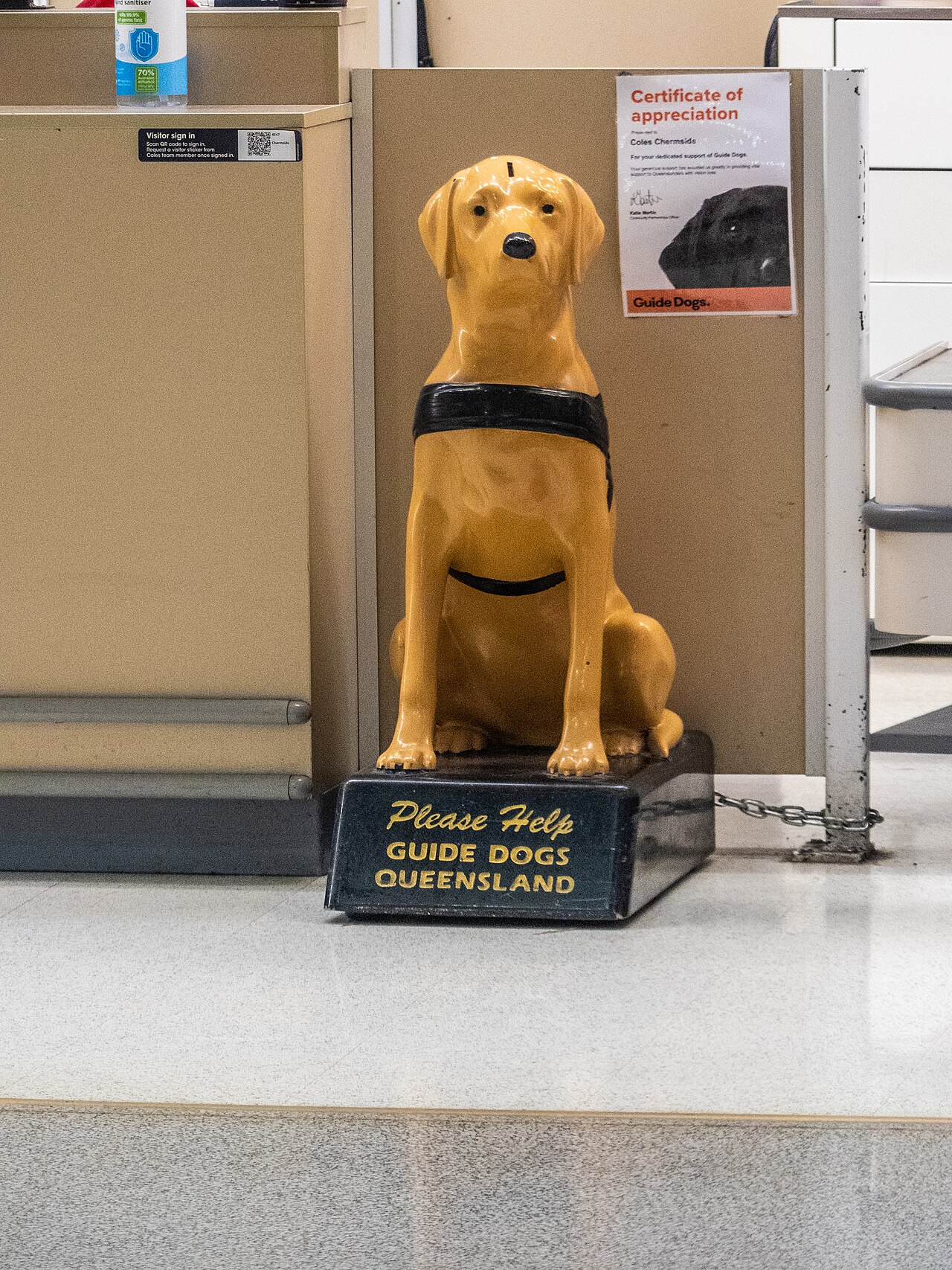
- Image source: Guide Dogs Qld dog Westfield Chermside
- Image source: Guide Dogs Qld fundraising Queen Street Mall Brisbane
_outside_the_Queen_Elizabeth_II_Courts_of_Law,_Brisbane,_01.jpg)

